
The Texas Board of Nursing (BON) plays a central role in regulating nursing practice throughout the state. Tasked with protecting the public, the BON evaluates complaints against nurses to ensure safety, professionalism, and accountability in healthcare. When a complaint is filed, it can trigger a formal investigation that may result in disciplinary action—or even the suspension or revocation of your license.
If you’re a nurse in Texas, understanding how Texas Nursing Board Complaints work is critical to protecting your career. In this blog, we’ll break down what can trigger a complaint, what the investigation process looks like, and how a TBON attorney can help you respond effectively.
What Triggers a Texas Nursing Board Complaint?
Anyone can file a complaint against a nurse in Texas. Patients, their family members, coworkers, employers, and even regulatory agencies like the Department of Health and Human Services can submit concerns directly to the TBON. While not all complaints result in investigations, many do—especially if the alleged conduct poses a potential risk to public safety or violates the Nursing Practice Act.
There are several common reasons nurses face complaints that lead to BON investigations. One major issue is negligence or patient harm. This includes things like medication errors, failure to monitor patients appropriately, or documentation mistakes that result in unsafe care.
Another common trigger is substance abuse or being impaired on duty. If a nurse is suspected of using drugs or alcohol while working, the BON will investigate to determine whether the nurse poses a risk to patients. HIPAA violations are also frequently reported. Sharing confidential patient information, whether intentionally or unintentionally, can lead to serious consequences.
Complaints also arise from accusations of unprofessional conduct, such as inappropriate language, workplace conflicts, or boundary violations. In some cases, criminal charges outside of the workplace—such as DWIs, theft, or assault—can trigger a complaint that prompts the BON to review whether the nurse is fit to practice. Finally, practicing without a valid or active license is a clear violation and almost always results in disciplinary action if reported.
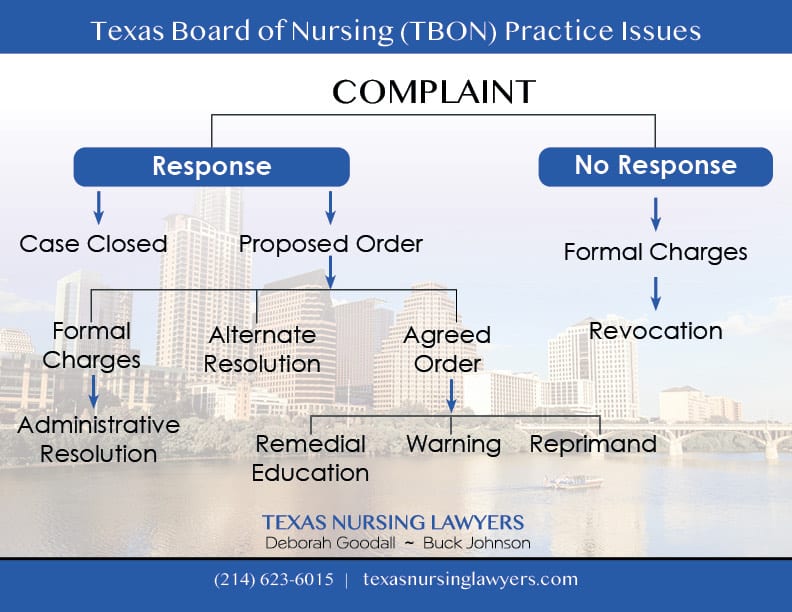
What Happens After a Texas Nursing Board Complaint Is Filed?
Once a complaint is submitted, the TBON initiates a multi-step process to evaluate and address it. First comes the initial review. The BON determines whether the complaint falls within its jurisdiction. If it doesn’t, the complaint is dismissed, and no further action is taken. If it does, the Board moves forward with a formal investigation.
During the investigation phase, the nurse is notified of the complaint in writing. This notice often includes the specific allegations and requests a response within a certain timeframe. At this point, the BON begins gathering evidence, which may include interviewing witnesses, reviewing patient records, and examining workplace policies or communications. The nurse may be asked to submit documentation or provide a written explanation. It’s essential to respond professionally and thoroughly—how you handle this step can significantly influence the outcome.
After the investigation is complete, the BON reviews the evidence and decides on an outcome. If no violation is found, the case is dismissed. If a minor issue is discovered, the nurse may receive a warning or formal reprimand. In more serious cases, the Board may order probation, additional training, or practice restrictions to remediate the issue. If the allegations are especially severe—such as patient abuse, criminal conduct, or repeated violations—the BON may suspend or revoke the nursing license entirely.
What Should a Nurse Do if They Are Under Investigation?
First and foremost, do not ignore a complaint notice. Failing to respond to the BON can result in default decisions against you, including automatic disciplinary action. Even if the complaint seems baseless, it’s crucial to treat the matter seriously. You should immediately seek legal representation from a qualified nursing attorney. These attorneys specialize in nursing law and understand the procedures, language, and expectations of the TBON. They can help you navigate the process from start to finish.
Do not respond to the complaint without understanding the full implications of your statement. What you say could be used to justify disciplinary action if not carefully worded. You should also begin gathering all supporting documentation that may strengthen your defense. This includes patient records, communications, policies, or statements from coworkers and supervisors. It’s equally important to follow every deadline and procedure outlined by the BON. Missing a deadline or submitting incomplete information can negatively affect the outcome of your case.
How a TBON Attorney Can Help With Texas Nursing Board Complaints
If you’re facing a complaint, an TBON attorney can make a huge difference. First, they help protect your rights and ensure your response is legally sound. They understand how the BON evaluates evidence and can help you present your case in the most favorable light. If the Board opens an investigation, your attorney will guide you through each stage—helping you prepare for interviews, draft statements, and understand your options.
Nursing board attorneys also negotiate with the BON on your behalf. In many cases, they can help reduce penalties, request alternative resolutions like remediation or continuing education, or even get the complaint dismissed. If your case escalates to a formal hearing, your attorney will represent you and defend your license before the Board. Appeals are also possible if you believe the outcome was unfair or excessive. In short, an nursing attorney is your best line of defense in protecting your career.
Whether the complaint is minor or serious, the stakes are high. A single BON complaint can lead to months of stress, legal fees, and professional setbacks. If you want to ensure the best possible outcome, don’t go it alone. The team at Texas Nursing Lawyers has the experience and insight to help you respond strategically and protect your future in nursing.
Conclusion
Texas Nursing Board Complaints are more than just paperwork—they’re the first step in a process that could impact your license, your job, and your entire nursing career. From minor reprimands to full license revocation, the consequences depend on how you respond and whether you’re equipped with the right legal support.
If you’re under investigation or have received a formal complaint notice, act fast and take control of the situation. With the help of a knowledgeable TBON attorney, you can navigate the process with confidence, protect your rights, and preserve the career you’ve worked so hard to build.
If you’re facing a TBON investigation, don’t wait. Contact an experienced TBON attorney today and let us help you protect what matters most.