
Yes, a misdemeanor in Texas can put your nursing license at real risk, even though most misdemeanors carry no jail time and limited public consequences. The Texas Board of Nursing (TBON) is not bound by the criminal classification. The Board evaluates the conduct behind the charge, not just the label, and can discipline a nursing license misdemeanor case the same way it would treat a more serious offense if the underlying behavior raises a public-safety concern.
In practice, that means a Class B misdemeanor tied to drugs or violence can draw heavier Board scrutiny than a higher-class case with no patient-care angle at all. Knowing how the Board actually thinks about these cases is the difference between a quiet warning and a public Board order.
According to the Bureau of Justice Statistics, millions of Americans carry a misdemeanor on their record. Most never face a professional license review. For licensed nurses, the standard is different.
Why TBON Cares About Misdemeanors at All
TBON’s mandate is public protection. The Nursing Practice Act lets the Board discipline a nurse for any conduct that suggests the nurse cannot safely practice, and the conduct that triggers a misdemeanor charge often falls within that scope. The Board does not need a felony conviction to act.
A pattern of misdemeanors, a single misdemeanor involving violence or dishonesty, or a misdemeanor tied to substance use can each be enough to open a case. The Board reads the police reports, the court records, and the disposition. It then asks whether the underlying behavior fits the standard of professional conduct expected of a Texas nurse.
Misdemeanor Classes in Texas (Quick Reference)
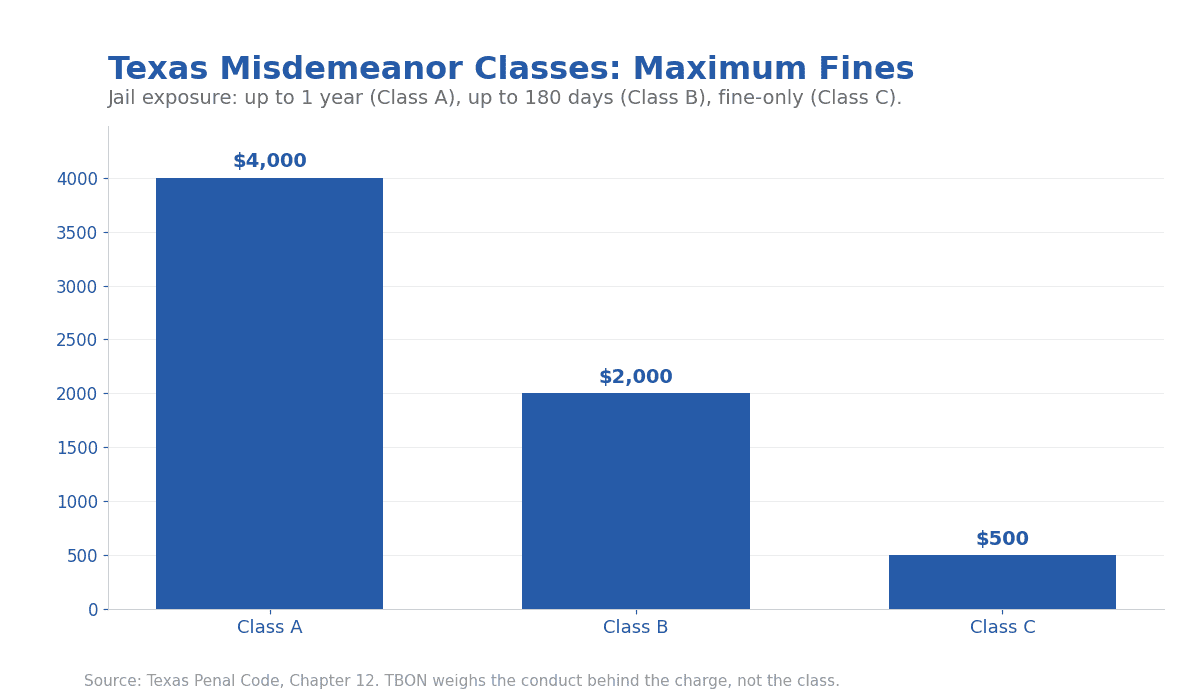
Texas misdemeanors fall into three classes:
- Class A misdemeanor: punishable by up to one year in county jail and a fine of up to $4,000. Examples include assault causing bodily injury, theft of property valued between $750 and $2,500, and resisting arrest.
- Class B misdemeanor: punishable by up to 180 days in jail and a fine of up to $2,000. Examples include first-offense possession of small amounts of marijuana, terroristic threat, and indecent exposure.
- Class C misdemeanor: typically fine-only offenses up to $500. Most Class C cases (such as routine traffic citations) do not require TBON disclosure, but some do, including theft under $100 and assault by contact.
The class matters less than the conduct. A Class B drug-paraphernalia charge can draw far more Board scrutiny than a Class A traffic-related case with no public-safety angle.
Which Misdemeanors Most Likely Trigger Discipline
Some categories almost always open a TBON investigation. If your charge falls into one of these, expect Board attention:
- Theft, fraud, or financial dishonesty: These offenses go directly to your trustworthiness. Even small-dollar theft cases (shoplifting, employee theft, hot checks) draw heavy Board attention because they suggest you may not be reliable with patient property, controlled substances, or billing.
- Assault and family violence: Assault causing bodily injury and family-violence misdemeanors raise concerns about how you manage conflict in clinical settings.
- Drug-related misdemeanors: Possession of paraphernalia, possession of small amounts of marijuana, or a drug-related public-intoxication charge raises the question of whether there is an active substance use issue. A Board evaluation often follows.
- DWI-related charges: Some DWI cases plead down to lesser misdemeanors. TBON treats those the same as the original DWI for licensing purposes; the conduct is what matters, not the final charge.
- Crimes of moral turpitude: This catch-all includes offenses involving dishonesty, deception, or disregard for the rights of others. Prostitution, certain fraud variants, and some public-order offenses fall here.
How TBON Evaluates a Misdemeanor Case
When the Board opens a case, it weighs several factors before deciding on discipline:
- Your professional record. A long, clean practice history is one of the strongest mitigators you have.
- The connection between the conduct and patient care. A theft charge involving controlled substances at the hospital is treated very differently from theft of a candy bar at a convenience store.
- Whether the conduct involved a pattern. A first-time isolated misdemeanor reads very differently than a third charge in two years.
- Substance use indicators. Any sign of an underlying substance issue dramatically changes the Board’s approach, usually toward evaluation, monitoring, or TPAPN.
- Your response and insight. Acceptance of responsibility, completion of treatment, and constructive remediation all carry weight when documented properly.
Realistic Outcomes
For most first-time, low-severity cases, TBON outcomes range from no action to a warning or fine. Higher-severity cases or repeat patterns can produce stipulated practice restrictions, monitoring, or in the worst cases, suspension. Outright revocation for a single misdemeanor is rare, though it is possible when the conduct involves patient harm or theft of controlled substances.
Why a Misdemeanor Case Needs Coordinated Defense
A misdemeanor case for a Texas nurse is two cases at once: the criminal matter in court and the administrative matter before TBON. The two run on different timelines and different rules of evidence. What you say in the criminal case can be used in the Board case, and the wrong order of operations can permanently damage the license outcome.
A nurse license defense attorney coordinates both tracks. That looks like structuring the criminal plea so it does not trigger a worse Board outcome, building a written response that contextualizes the conduct, and presenting mitigation evidence so the Board sees you as a complete professional and not a single bad incident. Early intervention is the difference between a private warning and a public Board order, and that difference often shows up on background checks for the rest of your career.
Don’t Let a Misdemeanor End Your Nursing Career
A misdemeanor does not have to cost you your nursing license, but the steps you take immediately after the charge (what you say to investigators, what you plead to in criminal court, and how you respond to the Board) will shape the outcome for years.
If you are a Texas nurse facing a misdemeanor charge or a TBON investigation, contact Texas Nursing Lawyers today for a free consultation. Attorneys Buck Johnson and Deborah Goodall have over 50 years of combined experience defending Texas nurses before the Board, and they can help you protect both your nursing license and your career.